

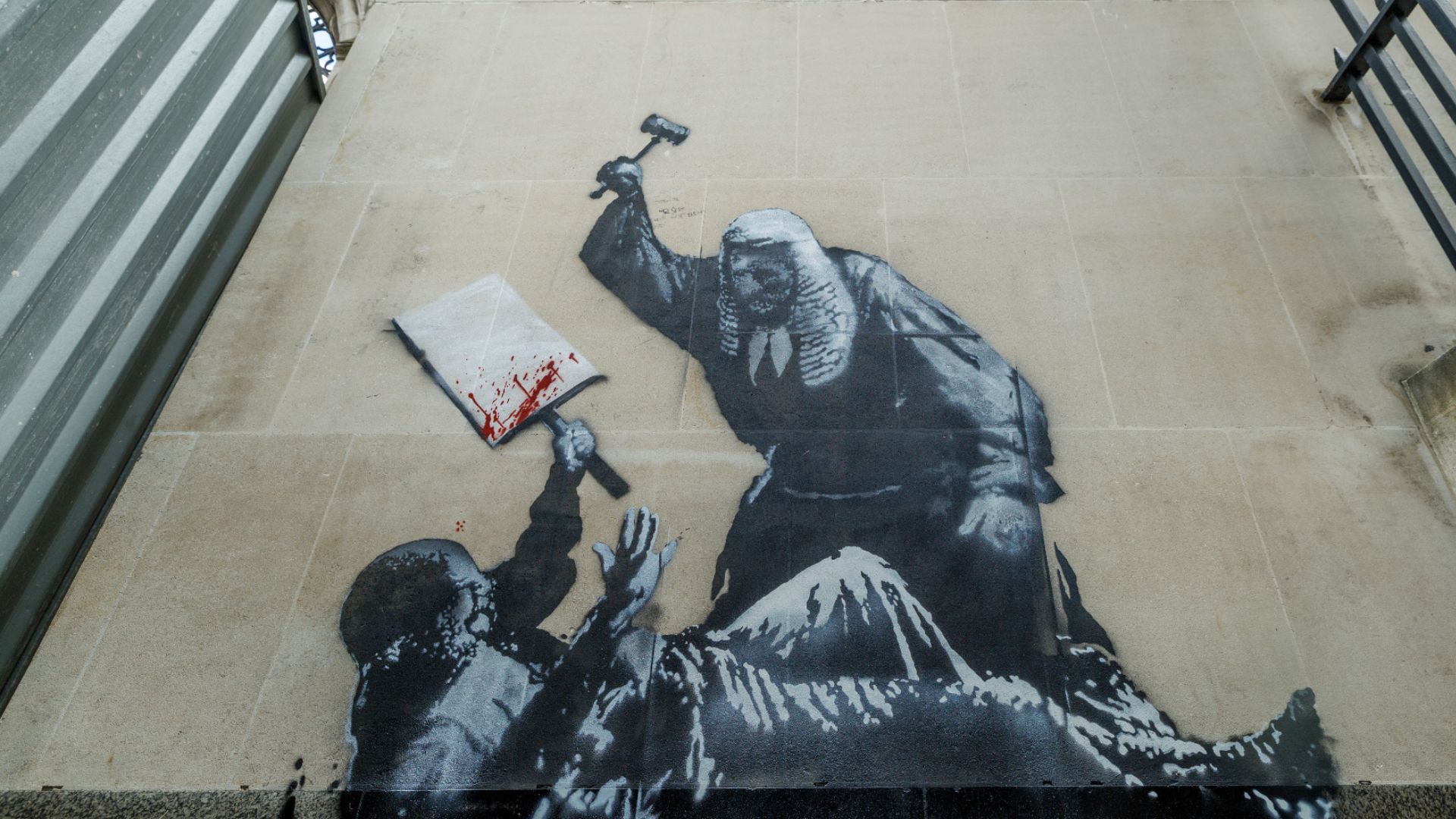
If you have ever seen a wall painting of a child, a rat, a police officer, or a balloon with a sharp message behind it, you may have asked yourself, who is Banksy? That question has fascinated art lovers, critics, collectors, and everyday people for decades. Banksy is one of the most famous artists in the world, yet his real identity has never been officially confirmed by the artist or by Pest Control, the body that authenticates Banksy works. He is widely described as an anonymous British graffiti artist known for public stencil art, dark humor, and anti-authority messages.
What makes Banksy so unforgettable is not just the art. It is the mystery, the timing, and the courage. His work appears in public spaces, often without warning, and turns ordinary walls into global conversation starters. He has used street art to talk about war, poverty, power, greed, children, and hope. In a world full of polished branding, Banksy feels bold, raw, and real. This guide explains who is Banksy, why the world cares so much, and what his art says about modern life.
Banksy Biography Table
| Detail | Information |
|---|---|
| Known Name | Banksy |
| Profession | Street artist, political commentator, filmmaker |
| Nationality | British |
| Known For | Anonymous stencil graffiti and public art |
| Rise to Fame | 1990s in Bristol, England |
| Signature Style | Stencils, satire, dark humor, social criticism |
| Common Themes | War, capitalism, politics, consumerism, freedom |
| Famous Works | Girl with Balloon, Love is in the Bin, There Is Always Hope |
| Film | Exit Through the Gift Shop (2010) |
| Authentication Body | Pest Control Office |
| Identity Status | Not officially confirmed by the artist or Pest Control |
Banksy Profile Table
| Profile Item | Details |
|---|---|
| Art Form | Graffiti, stencil art, installation, performance |
| Working Method | Fast stencil technique in public places |
| Main Visual Symbols | Rats, children, policemen, balloons, monkeys |
| Tone | Clever, rebellious, emotional, provocative |
| Audience | Public viewers, collectors, museums, media |
| Message Style | Short visual punch with strong social meaning |
| Global Reputation | One of the best-known street artists in the world |
| Official Sales/Certificates | Controlled through Pest Control Office |
| Public Identity | Kept private and heavily debated |
The simple answer to who is Banksy
The simple answer to who is Banksy is this: Banksy is an anonymous British street artist whose work mixes graffiti, stenciling, satire, and activism. He became known in Britain during the 1990s and later became a global name because of his daring public artworks and strong political messages. Britannica notes that Banksy is famous for antiauthoritarian art in public spaces and that he began using stencils around 2000, helping him work faster and create a style people instantly recognize.
That quick answer is true, but it does not capture the whole story. Banksy is more than a painter on walls. He is also a storyteller, a provocateur, and a master of public attention. His work often feels simple at first glance, but it lands with force. A child reaching for a balloon can become a message about loss. A rat can stand for survival. A policeman can become a symbol of control. Banksy turns public art into public debate.
Where Banksy came from
To understand who is Banksy, it helps to begin in Bristol, England. Banksy is closely tied to Bristol’s graffiti culture, where he rose to notice in the 1990s. That city had a strong underground art and music scene, and it gave him room to develop his voice. Britannica places his early emergence in Britain during that decade, before his work spread internationally.
Many artists work hard to enter galleries first. Banksy did the opposite. He built his name in the street. That matters because the street shaped his message. Public walls are direct. They do not ask for a ticket, a dress code, or permission from elite spaces. In my view, that is one reason Banksy connected with so many people in the United States and around the world. His art feels open to everyone. It can stop a commuter, surprise a tourist, or inspire a teenager in seconds.
Why Banksy stays anonymous
The biggest reason people keep asking who is Banksy is his anonymity. For years, many theories have circulated about his real name, and recent reporting has again raised claims about possible identity. But the key point is this: Banksy’s identity has not been officially confirmed by the artist, and Pest Control has not publicly ended the mystery. Britannica also describes the identity as long guarded and widely debated.
Anonymity does more than protect him. It strengthens the work. When the artist disappears, the art speaks louder. People focus on the message instead of celebrity gossip, fashion, or red carpets. That mystery also gives each piece more power. A new Banksy mural feels like an event because it appears without warning and carries a sense of risk. In a media world driven by faces and personal brands, Banksy’s refusal to step into the spotlight is part of his genius.
How Banksy changed street art
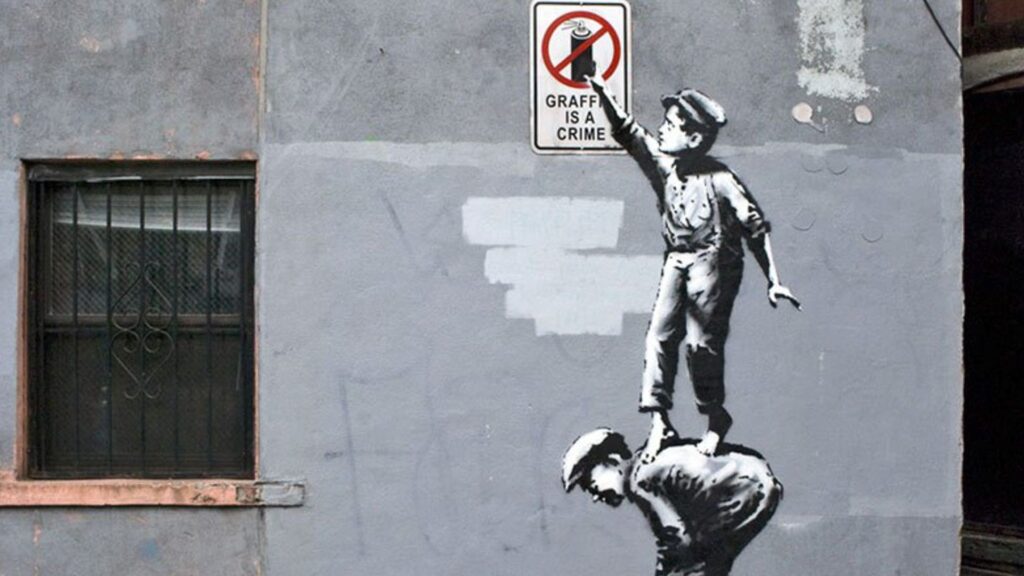
Before Banksy, graffiti was often misunderstood by the public as simple vandalism. After Banksy, millions of people began to see street art as culture, commentary, and even history. He did not invent graffiti, but he helped push it into mainstream conversation in a powerful way. Britannica notes that he merged graffiti art with installation and performance, which expanded what public art could be.
That shift was huge in the United States too. American audiences responded to his mix of rebellion and meaning. His art felt immediate, like a headline on a wall. It also proved that a stencil could carry as much emotional punch as a painting in a museum. Banksy helped make people look twice at urban spaces. A plain wall became a stage. A stencil became a statement. A city corner became part of global culture.
Banksy’s signature style
A big part of answering who is Banksy is understanding how he works. Banksy is strongly associated with stencils. Britannica says he adopted stencil methods around 2000, which helped him move quickly and create a clear visual identity. His art often uses black-and-white imagery with one striking twist, such as a red balloon or a sharp phrase. Rats, children, police officers, soldiers, and animals appear again and again.
This style works because it is simple and sharp. It grabs attention fast. A busy person can understand the image in seconds, yet the meaning lingers much longer. That is rare. Many artists are complex but not memorable. Banksy is both. His images are easy enough for a child to notice, but strong enough for adults to debate for years. That balance is a major reason his work travels so well across cultures.
What Banksy’s art usually means
When people ask who is Banksy, they also want to know what he stands for. His art often speaks against war, control, greed, and empty consumer culture. At the same time, it can carry tenderness, humor, and hope. Britannica describes his work as antiauthoritarian, and that fits well with the themes most viewers recognize.
One reason his art feels so human is that he often uses familiar figures. A child is easier to connect with than an abstract symbol. A balloon can mean joy, memory, or loss. A rat can represent the ignored people who still survive and push back. My own reading is that Banksy’s best work does not preach. It nudges. It makes you smile first, then think harder. That soft entry is one reason his criticism lands so effectively.
Famous Banksy artworks everyone should know
No article about who is Banksy is complete without his best-known works. Girl with Balloon became one of his most recognized images. In 2018, a version of the work partially shredded itself just after being sold at Sotheby’s in London for more than £1 million. Sotheby’s said the event happened just after the hammer fell, and the altered work later became known as Love Is in the Bin.
He is also known for bold public interventions, museum pranks, and politically charged murals. Another major part of his public image is the 2010 film Exit Through the Gift Shop, which Britannica identifies as Banksy’s documentary film project. That film added another layer to his mystery by blending art, media, and performance.
These works matter because they show Banksy is not only painting pictures. He stages moments. He understands spectacle. He knows that modern art lives not only on walls but also in headlines, phones, and memory.
The story behind Girl with Balloon and Love Is in the Bin
If you still wonder who is Banksy, look at the famous auction shredder moment. It explains his mindset almost perfectly. Girl with Balloon sold at Sotheby’s in 2018, then passed through a hidden shredder built into the frame. Sotheby’s described it as an unprecedented moment, and the transformed work later took on a new life as Love Is in the Bin.
Why was that moment so powerful? Because it mocked the art market while becoming part of it at the same time. That tension is classic Banksy. He criticizes systems but also uses them to amplify his message. It was funny, rebellious, and smart. It asked a sharp question: when art becomes expensive and elite, does it lose its original soul? That one act reached far beyond the auction room and became a defining image of modern culture.
Is Banksy’s real name known?
This is where the mystery grows. Many reports and theories have pointed to possible identities over the years. Britannica says the mystery has sparked ongoing speculation, and recent Reuters-based coverage has renewed claims about one possible individual. Still, the artist has not publicly ended the debate, and Pest Control has not officially closed the matter.
So, when someone asks who is Banksy, the honest answer is that the public has strong theories but no final official statement from Banksy. That uncertainty is important. It protects accuracy. It also respects the difference between reporting and confirmed fact. For readers, the smartest takeaway is simple: Banksy’s cultural identity is clear, but his legal personal identity remains publicly unresolved by the artist’s own official channels.
Why Americans care so much about Banksy
For a USA audience, who is Banksy is more than an art question. It is a culture question. Americans respond to stories about outsiders, rebels, and truth-tellers. Banksy fits that image perfectly. He also speaks to issues Americans care about deeply, including power, surveillance, inequality, war, and media spectacle. His work is easy to share, easy to remember, and strong enough to spark conversation across political lines.
Another reason he resonates in the U.S. is that his art feels democratic. You do not need a fine art degree to get the point. You can be a student, parent, worker, or tourist and still connect with the image. That broad appeal is rare. Plenty of famous artists are admired. Banksy is discussed. People argue about him at dinner tables, on social media, and in classrooms. That kind of reach is a sign of real cultural force.
How Banksy stays relevant year after year
Some artists rise fast and then fade. Banksy has stayed relevant because his work taps into permanent human concerns. Power, fear, hope, freedom, and injustice never really go away. His images keep finding fresh meaning because the world keeps giving them new context. Official notices from Pest Control also show that Banksy’s market presence and public relevance remain active, especially around authentication and unauthorized exhibitions.
He also understands timing. A Banksy image often appears exactly when public tension is high. That makes the work feel alive, not archived. In my opinion, Banksy’s staying power comes from this mix: memorable images, moral courage, and excellent instinct for public attention. Many artists have talent. Fewer know how to make a single image feel like breaking news.
What we can learn from Banksy
At its heart, the question who is Banksy may matter less than what Banksy teaches us. He reminds us that art does not need a fancy frame to matter. It can live on brick, metal, concrete, and street corners. He also shows that humor can be a serious tool. A witty image can challenge a government, expose hypocrisy, or comfort people who feel unseen.
Banksy also teaches a larger lesson about voice. You do not need to shout to be powerful. You need clarity. His best work says a lot with very little. That is a rare skill in any field. Whether you love street art or not, Banksy’s influence is hard to deny. He changed how people look at cities, institutions, and public messages. That is why his name still matters.
Conclusion
So, who is Banksy? He is an anonymous British street artist whose work transformed walls into conversations and public spaces into places of reflection. He became famous through stencil-based art, bold political messages, dark humor, and unforgettable public moments. His identity remains officially unconfirmed by the artist’s own channels, but his impact is beyond dispute.
What makes Banksy truly special is not just mystery. It is meaning. He makes people stop, think, question, and feel. In a noisy world, that is powerful. If Banksy interests you, the best next step is simple: look closely at the images, not only the headlines. The more you study the work, the more you understand why the question who is Banksy continues to capture the world.
FAQs
Who is Banksy in simple words?
Banksy is an anonymous British street artist known for stencil graffiti, political messages, and powerful public art. He became famous in the 1990s and remains one of the most recognized street artists in the world.
Is Banksy’s real identity confirmed?
No official public confirmation has come from Banksy or Pest Control. There are many theories and recent reports, but the artist’s official identity remains unconfirmed through official channels.
Why is Banksy so famous?
Banksy is famous because his art is bold, easy to recognize, emotionally strong, and socially sharp. He also uses mystery and surprise in a way few artists ever have.
What type of art does Banksy make?
Banksy is best known for stencil street art, but his work also includes installations, performance-style interventions, and film projects such as Exit Through the Gift Shop.
What is Banksy’s most famous artwork?
One of Banksy’s most famous works is Girl with Balloon. Its partially shredded auction version became Love Is in the Bin after the 2018 Sotheby’s event.
How are real Banksy artworks authenticated?
Pest Control Office is the official body that issues certificates of authenticity for Banksy works such as paintings, prints, and sculptures.
you may also like to read about









Leave a Reply