

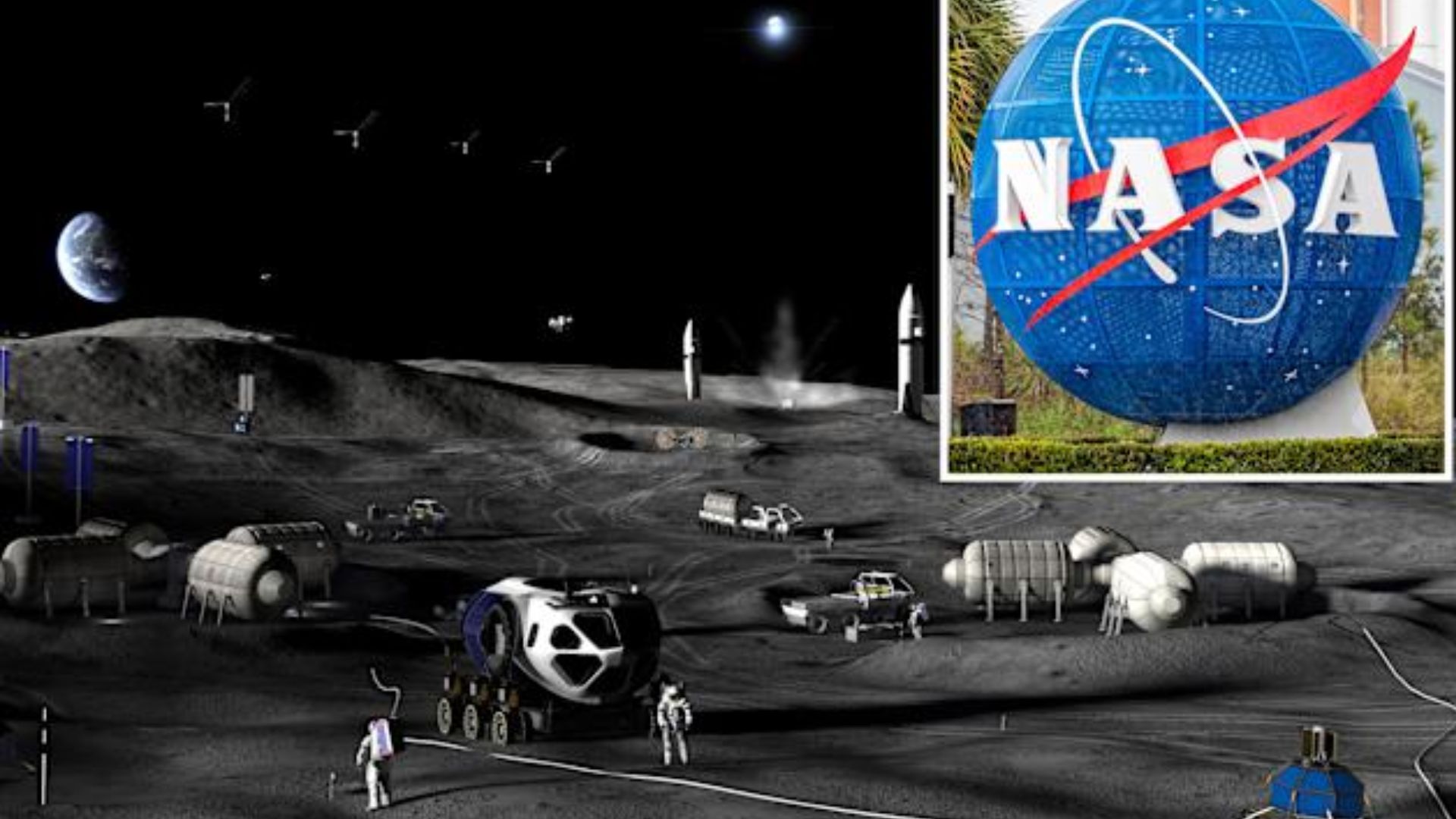
When people search for the NASA $20 billion moon base, they are usually talking about a much bigger story than one building on the Moon. They are talking about a full American push to live, work, and explore there in a steady way. Recent reporting described a roughly $20 billion effort, while NASA’s own updates show the money is spread across landers, surface systems, power, mobility, science, and long-term lunar infrastructure. In other words, the NASA $20 billion moon base is not a simple real estate project. It is a giant national effort built step by step through Artemis missions, commercial partners, and international support. For American readers, this matters because it brings together science, jobs, national leadership, and the dream of pushing human life farther into space than ever before.
NASA Profile at a Glance
| Item | Details | Source |
|---|---|---|
| Full name | National Aeronautics and Space Administration | |
| Founded | 1958 | |
| Core mission | Explore the unknown in air and space, innovate for humanity, and inspire through discovery | |
| Main lunar program | Artemis | |
| Long-term lunar goal | Build a sustainable human presence on and around the Moon | |
| Main target region | The lunar south pole region | |
| Key operating model | Work with U.S. companies and international partners | |
| Why it matters | It prepares the way for future human missions to Mars |
Moon Base Biography and Timeline
| Year | Milestone | Why it matters | Source |
|---|---|---|---|
| 1969 | Apollo 11 lands humans on the Moon | Proved the Moon was reachable | |
| 1972 | Apollo 17 becomes the last Moon landing | Ended the Apollo surface era | |
| 2022 | Artemis I flies uncrewed around the Moon | Restarted deep-space lunar testing | |
| 2025 | CLPS partner Firefly’s Blue Ghost lands on the Moon | Showed commercial lunar delivery is becoming real | |
| 2026 | Artemis II is set as the first crewed Artemis flight | Moves humans back toward lunar operations | |
| 2027 | NASA says Artemis III is a new demo mission in low Earth orbit | Tests landing systems before the first new lunar landing | |
| Early 2028 | NASA targets the first Artemis lunar landing under the updated plan | Marks the return of astronauts to the lunar surface | |
| Late 2028 and beyond | More surface missions and a phased lunar base strategy | Starts the move from visits to sustained presence |
What the NASA $20 Billion Moon Base Really Means
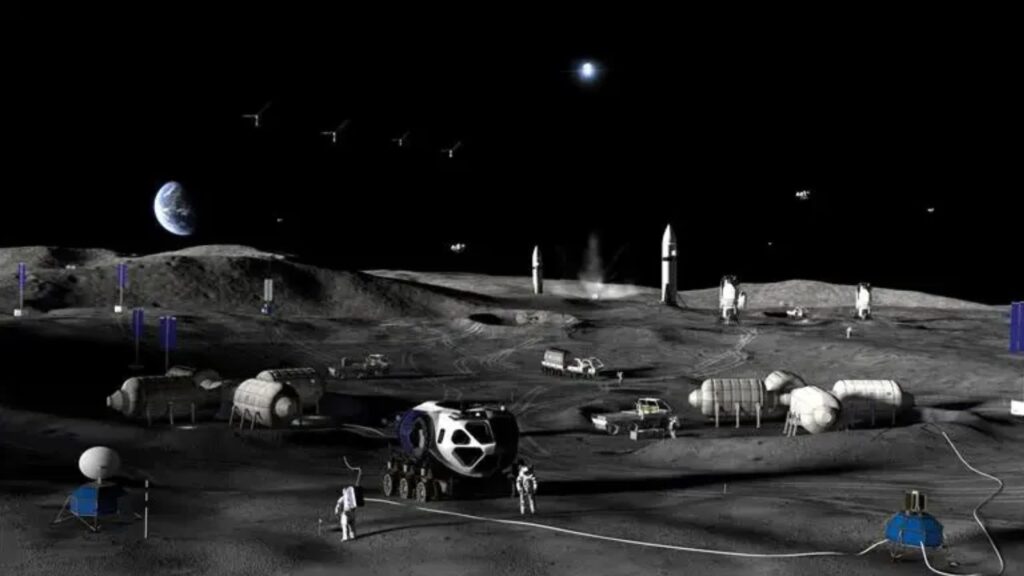
The phrase NASA $20 billion moon base sounds like NASA is about to drop one giant habitat onto the Moon and open the doors. That is not how this works. NASA’s newer plan is modular. That means it will build the base piece by piece. First come robotic missions, tools, rovers, power systems, and cargo testing. Then come early surface systems that support regular astronaut visits. After that, heavier infrastructure can arrive to support long stays and, finally, a more permanent foothold. NASA said this plan will happen in three phases and will lean on reusable hardware, commercial systems, and partner contributions. That makes the project more flexible and more realistic than an all-at-once build. So when you hear NASA $20 billion moon base, think of a full lunar ecosystem growing over time, not one giant moon house landing overnight.
Why America Wants a Moon Base Now
The timing is not random. NASA says the Moon is the next proving ground for long-term human exploration, and the agency ties this work directly to future Mars missions. The Moon is close enough to reach faster than Mars, but still hard enough to test the systems humans need to survive off Earth. It lets NASA learn how to manage dust, radiation, long nights, harsh temperatures, weak gravity, and surface operations. For the United States, the NASA $20 billion moon base also carries a strong national message. It is about leadership, science, industrial strength, and staying ahead in a new era of space competition. This is one reason current NASA messaging connects lunar work to American capability, innovation, and global partnerships. The Moon is no longer just a symbol. It is becoming a working test site for the next age of exploration.
Why the Lunar South Pole Is Such a Big Deal
NASA is not picking the Moon at random, and it is not picking just any spot on the Moon either. The south pole region matters because scientists believe it may hold water ice in permanently shadowed areas. Water is huge in space. It can support life, help make oxygen, and even be turned into fuel in future systems. The south pole also offers strong science value because it preserves clues about the Moon’s history and the early solar system. On top of that, the area may provide better lighting conditions on some high ground, which can help power systems work longer. That is why the NASA $20 billion moon base is really about location as much as scale. If America can work well at the lunar south pole, it can unlock a smarter path toward longer stays and more useful lunar operations.
How Artemis Turns the Moon Base Dream Into Real Hardware
Dreams do not build bases. Hardware does. Artemis is the program that turns the NASA $20 billion moon base from a headline into machines, missions, and working systems. NASA’s official pages show that Artemis includes the Space Launch System rocket, the Orion spacecraft, commercial human landing systems, next-generation spacesuits, rovers, lunar delivery services, and partner contributions. Recent updates also show NASA changed some mission sequencing. Artemis II is the first crewed flight. Artemis III is now described as a low Earth orbit demonstration mission in 2027. NASA then targets its first new lunar landing in early 2028 under Artemis IV, with Artemis V expected later in 2028 and more missions after that. This matters because it shows NASA is trying to reduce risk before pushing astronauts back to the surface. A moon base only works if the transport chain works first.
The Three Phases of the NASA $20 Billion Moon Base Plan
NASA recently laid out the path in simple stages. Phase One is build, test, and learn. In this stage, NASA increases lunar activity through CLPS deliveries, the Lunar Terrain Vehicle program, science tools, and key technology tests. Phase Two adds early infrastructure. This is where the Moon starts to shift from short visits to a place with regular astronaut operations, logistics, and partner systems. Phase Three is the biggest leap. NASA says heavier cargo-capable landers will bring the infrastructure needed for a continuous human foothold and a permanent lunar base. This is the heart of the NASA $20 billion moon base idea. It is not just about stepping onto the Moon. It is about creating the conditions to stay, work, and keep returning without starting from zero every time. That phased design gives the plan more strength and common sense.
The Systems That Will Keep Astronauts Alive
A moon base is not just walls and windows. It is life support, power, movement, and safe shelter. Older NASA concept work for Artemis Base Camp described a modern lunar cabin, a lunar terrain vehicle, and a pressurized mobile platform often compared to a mobile home. More recent plans still point toward that same core logic: astronauts need a place to live, a way to travel, and systems that keep them alive. NASA is also working on next-generation spacesuits and surface mobility systems, while its current plans highlight power generation, communications, navigation, logistics, and surface operations. In plain words, the NASA $20 billion moon base depends on many invisible systems doing their job every minute. Air, heat, power, water, cargo delivery, safe landing, safe ascent, and smart mobility all matter just as much as the habitat itself.
The Real Cost Behind the NASA $20 Billion Moon Base Headline
Money is where the story gets interesting. Recent news coverage used the NASA $20 billion moon base line to describe the overall push, but official NASA and NASA OIG documents show the spending is split across many moving parts. NASA’s FY 2026 budget message said it was allocating more than $7 billion for lunar exploration. Separately, NASA’s inspector general said the Human Landing System program alone has already obligated $6.9 billion and is estimated to cost $18.3 billion through fiscal year 2030. That means one major piece of the lunar push nearly reaches the headline number by itself. So the smart way to read the NASA $20 billion moon base phrase is this: it is a shorthand for a wide, long-term buildout, not one neat bucket of cash labeled “moon base.” The project is expensive because survival on another world is expensive.
What Astronauts Will Actually Do on the Moon
The Moon base is not being built for sightseeing. NASA says astronauts will collect samples, run science experiments, test new systems, and learn how to live and work on the lunar surface. The agency also wants crews to study the environment, practice surface operations, and use the Moon to lower the risk of future Mars missions. In early surface missions, astronauts are expected to spend limited time on the ground, but NASA’s older Artemis Base Camp concept aimed for much longer stays as the system grows. Newer plans point in the same direction by talking about a continuous human foothold and long-duration presence. This is why the NASA $20 billion moon base matters. It turns the Moon from a flag-and-footprints story into a working field lab. Every trip can teach lessons about human endurance, engineering, mining, communications, and off-world survival.
Why the NASA $20 Billion Moon Base Matters to the U.S. Economy
For Americans, this is not only a space story. It is also a jobs story. NASA says companies across every state have contributed to Artemis, and the agency links lunar work to a growing space economy, demand for skilled workers, and new industries. That means the NASA $20 billion moon base can drive work in manufacturing, robotics, software, materials, communications, transportation, research, and education. It can also create stronger supply chains and new business models through commercial lunar services. For students in the United States, this kind of project sends a strong signal that science and engineering still lead to bold futures. For businesses, it opens room for contracts, inventions, and spin-off technologies. The Moon base may sit far from American soil, but the economic effects can show up in labs, factories, classrooms, and startups all across the country.
The Biggest Problems NASA Still Has to Solve
The vision is exciting, but the road is still hard. NASA’s inspector general warned that lunar landers face serious cost, schedule, and safety challenges. The audit also discussed the high stakes of ascent from the Moon, the danger of debris, engine risks, and the need for strong oversight as providers develop new technologies. Beyond the landers, there are many other problems to solve. Lunar dust is sharp and nasty. Radiation is a constant threat. The Moon has long periods of darkness in some areas. Every kilogram of cargo costs a lot to send. Even a small failure can put lives at risk. That does not mean the NASA $20 billion moon base is a bad idea. It means success depends on patience, testing, and honest engineering. Big goals in space only become real when small details work perfectly.
Who Is Helping NASA Build This Future
NASA is not trying to do this alone. U.S. companies are building major parts of the system, including the landers and lunar delivery missions. International partners also play a visible role. NASA’s recent moon-base outline mentioned JAXA’s pressurized rover, the Italian Space Agency’s multi-purpose habitats, and the Canadian Space Agency’s lunar utility vehicle as part of the growing surface vision. NASA also says the Artemis Accords now include more than 60 signatories, giving the program a wider diplomatic and operating framework. This partner model makes the NASA $20 billion moon base stronger because it spreads knowledge, cost, and capability. It also turns the base into more than an American outpost. It becomes a shared platform shaped by U.S. leadership, commercial speed, and allied support. That mix may be one of NASA’s smartest choices.
What Happens Next for the NASA $20 Billion Moon Base
The next few years are the bridge between concept art and reality. Artemis II is meant to send astronauts around the Moon. NASA’s updated architecture then uses a new demo mission in 2027 before the first lunar landing in early 2028. After that, NASA wants a faster cadence, more reusable systems, and eventually landings every six months, with the chance to increase the pace later. The agency also says it plans to pause Gateway in its current form and focus more directly on surface infrastructure for sustained operations. That makes this moment feel important. The NASA $20 billion moon base is no longer just an idea for some far future decade. It is becoming a live national program with real schedules, real contracts, and real pressure to deliver. The story now moves from promise to proof.
FAQs
Is the NASA $20 billion moon base one single building?
No. The NASA $20 billion moon base is better understood as a phased lunar buildout. NASA’s current plan involves repeated missions, rovers, habitats, cargo systems, logistics, and surface infrastructure added over time rather than one giant structure landing all at once.
Where will NASA likely build its long-term lunar presence?
NASA’s Artemis work centers on the lunar south pole region. That area is attractive because of possible water ice, strong science value, and conditions that may support longer operations.
How much is NASA really spending on the NASA $20 billion moon base?
The headline is a shortcut. NASA’s own documents show billions spread across lunar exploration systems, while the inspector general says the Human Landing System alone is estimated to reach $18.3 billion through 2030. So the total lunar push is broad, not one clean line item.
When could astronauts start staying longer on the Moon?
NASA’s long-term goal is a sustained human presence, and older Artemis Base Camp concepts envisioned much longer stays as infrastructure grows. The newer three-phase base plan points in that same direction, with early infrastructure first and long-duration presence later.
Why does the NASA $20 billion moon base matter for everyday Americans?
Because it can grow jobs, inspire students, strengthen U.S. industry, and push new technology into the wider economy. NASA says Artemis already involves contributions from every state and supports an expanding space economy.
Is this really about the Moon, or is it about Mars too?
It is both. NASA repeatedly says lunar work is meant to prepare for future human missions to Mars. The Moon is the testing ground where the agency can prove systems before sending crews much farther away.
Conclusion
The NASA $20 billion moon base is one of the boldest stories in American spaceflight right now. It combines courage, science, technology, jobs, and national ambition in one powerful mission. But the smartest way to see it is not as a shiny single base waiting to appear overnight. It is a steady build. It is rovers, landers, habitats, power, cargo, crews, and constant learning. NASA wants to move from short visits to a real human foothold on the Moon, and recent updates show that push is speeding up. For the United States, this is more than a space headline. It is a test of what the country can still build when it aims high. And if NASA gets this right, the Moon will not be the finish line. It will be the launchpad for everything that comes after.
you may also like to read about












Leave a Reply